Asteroid Belt


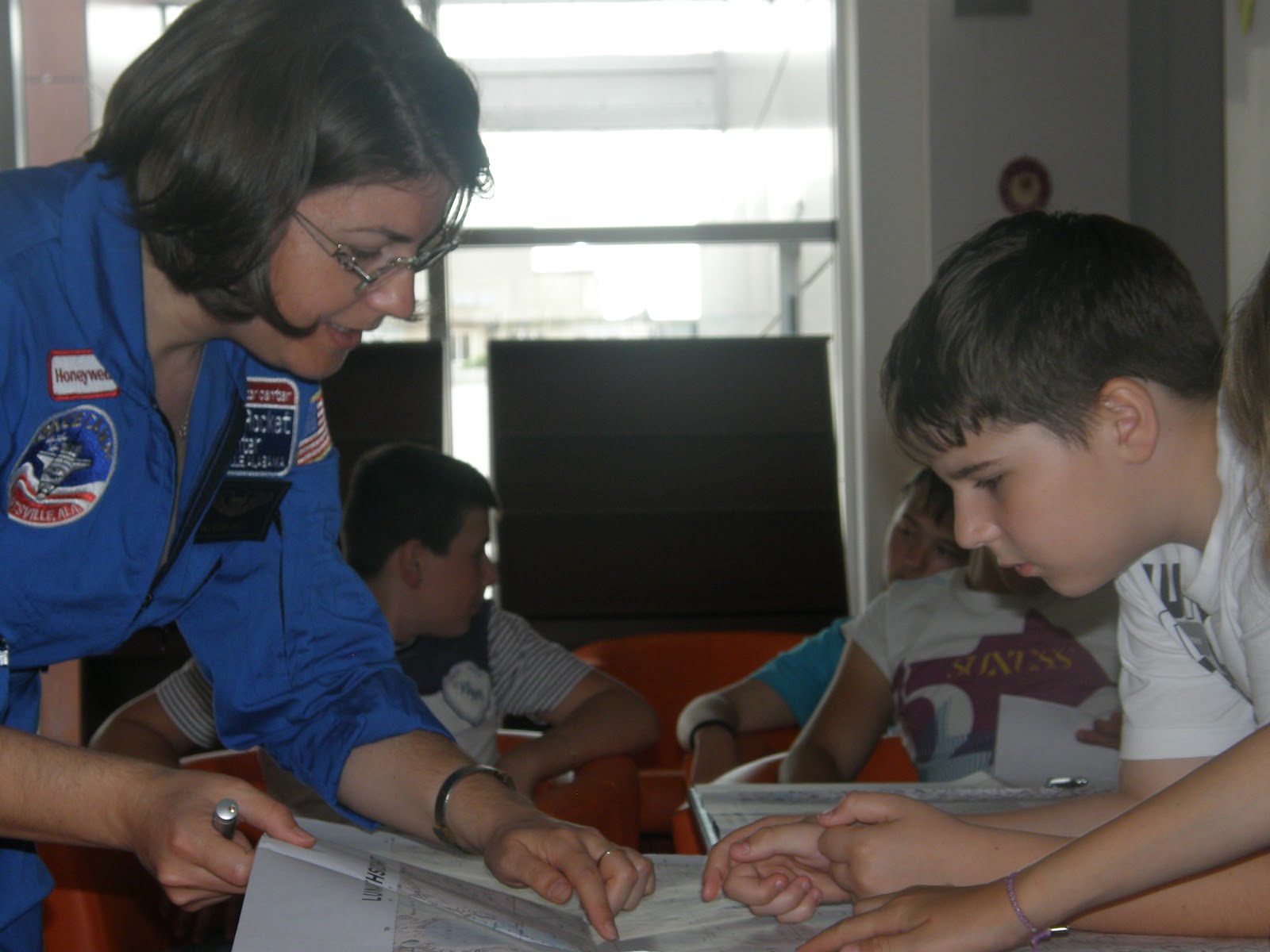
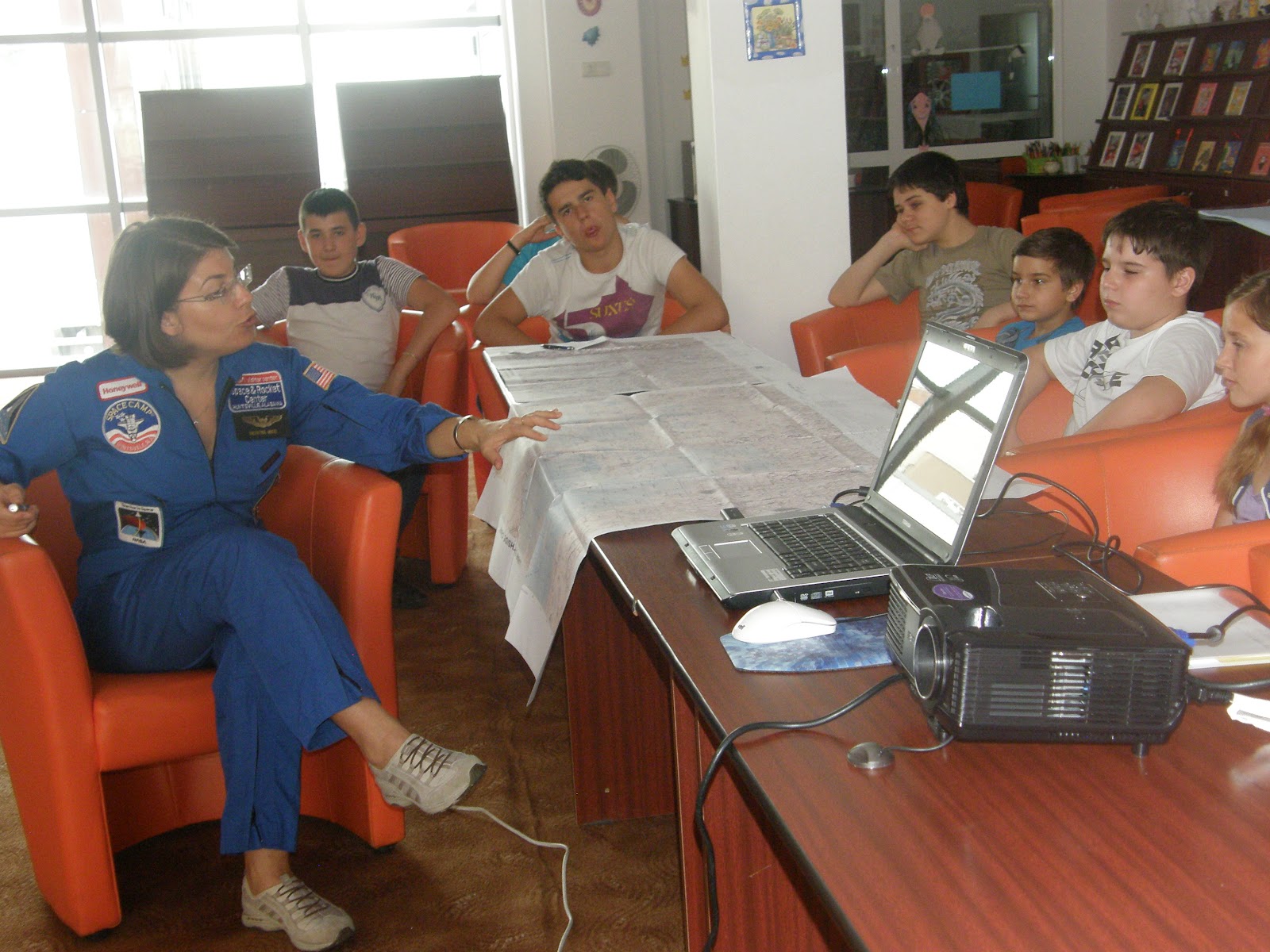
The Children's Educational Center, Oradea, Romania
February 28, 2013


Billions of space rocks-asteroids - orbit the Sun within the inner Solar System. Most are in the Asteroids Belt, which lies between the orbits of Mars and Jupiter.
There are three main types of asteroids-those made of rock, those made of metal, and those that are a mixture of the two.
When a meteorite collides with Earth, it can form an impact crater on its surface. 


Mars, the red planet

The Children's Educational Center in Oradea, Romania
February 14, 2013

Named after the roman god of war because of its dusty red appearance, Mars is known as The Red Planet. Along with Mercury, Venus, and Earth, it is one of the four terrestrial planets of the inner Solar System.

The martian moons-Phobos and Deimos are small sattelites with a lower density than Mars. They may be asteroid captured by the Martian gravity.

Olympus Mons is the largest volcano in the Solar System, and Valles Marineris a vast canyon system.

The Earth, our home

Children's Educational Center in Oradea, Romania
January 31, 2013


Our planet is the only planet with both liquid water and frozen ice that has an atmosphere rich in oxygen, and on which life exists.

Earth is surrounded by magnetosphere that protects it from the effects of the solar wind.

Earth's surface is shaped by plate tectonics. There are eight large plates and many smaller ones. Some consist only of ocean floor, while others include continents.


 "Dacia" Middle School
Students from grade 7C
January 30, 2013


digi24.ro | Lecţia de astronomie, predată de

digi24.ro | Lecţia de astronomie, predată de: Iubeşte astronomia şi îndrăzneşte să visese că într-o zi va călca pe urmele lui Neil Armstrong, celebrul astronaut care a păşit pe lună. Elevii sunt pentru ea bunul cel mai de preţ, de aceea încearcă să le transmită dragostea pentru planete şi stele. Se numără
printre norocoşii lumii care au ajuns la NASA. Sunt cuvintele care o descriu cel mai bine pe Valentina Matei, profesoara de fizică din Oradea care a reuşit să se alăture... cremei ştiinţei mondiale.

digi24.ro | Vocile Bihorului, 11 ianuarie 2013, De la scoala Dacia la NASA

digi24.ro | Vocile Bihorului, 11 ianuarie 2013, De la scoala Dacia la NASA

Transit of Venus

Children's Educational Center of Oradea, Romania
May 31, 2012

The 2012 transit of Venus, when the planet Venus appeared as a small, dark disk moving across the face of the Sun, is visible in the morning of 6 June 2012, in Oradea.  Transits of Venus are among the rarest of predictable celestial phenomena and occur in pairs, eight years apart, which are themselves separated by more than a century. The previous transit of Venus took place on 8 June 2004, and the next pair of transits will occur on 10–11 December 2117 and in December 2125.
Unfortunately, the sky wasn't clear on 6 June in Oradea.


Journey around the Moon (4, 5, 6)

 Children's Educational Center of Oradea, Romania
April 19, May 3 and May 17, 2012


In these three educational activities, students studied pictures taken in GRAIL MoonKAM program. Students  studied  photos sent by Ebb and Flow with seas, impact craters with different diameters, volcanic features and mountains.

Finally, we studied together Haret crater on the far side of the Moon and  Carpathian Mountains.
On 17 May my special guest was Mrs. Dragos Daniela, math teacher at "A. Lazar" High-School in Oradea.

Journey around the Moon (3)

Dacia Middle School Oradea, Romania
April  5-th, 2012


In the "Another School" program, students from 7-C grade from Dacia School,  learn about the Moon. They sent requests to Ebb with places on lunar surface, in order to be taken with its cameras. Diana has prepared for us a picture with Ebb, Flow and the Moon.

Journey around the Moon (2)

Dacia Middle School, Romania

April 5-th and 6-th 2012

In the "Another School" program, students from 4-D grade from Dacia School,  learn about the Moon. They sent requests to Ebb with places on lunar surface, in order to be taken with its cameras.
1. The Moon
2. Craters and seas on the lunar surface.
3. The space shuttle.
4. Building of rotative sky map.