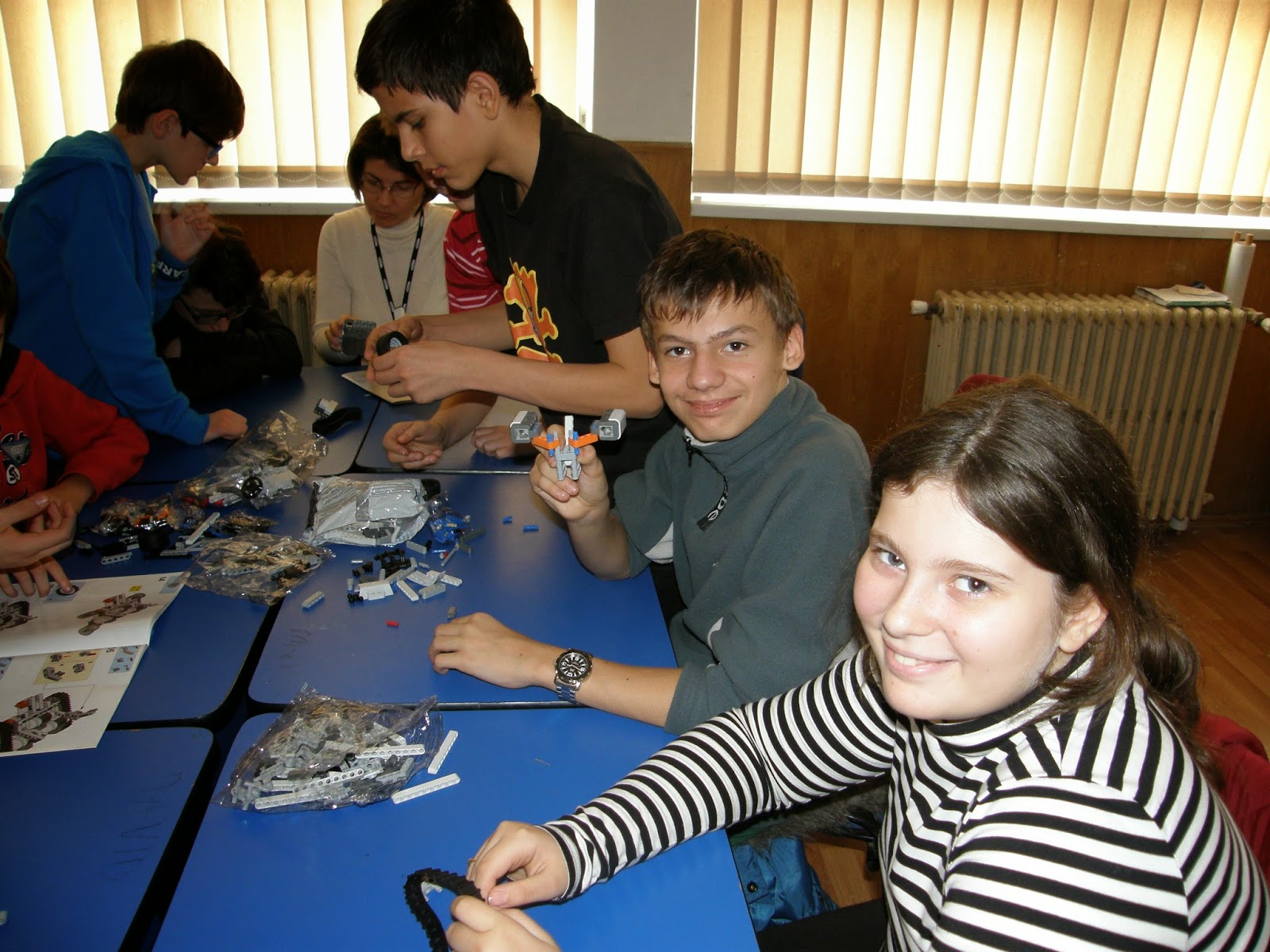
Time: during 2013-2014 school year
The Day the Earth Smiled
July 19, 2013
Oradea, Romania.
In this rare image taken on July 19, 2013, the wide-angle camera on NASA's Cassini spacecraft has captured Saturn's rings and our planet Earth and its moon in the same frame.
The Earth, which is 1.44 billions kilometers away in this image, appears as a blue dot in center right; the Moon can be seen as a fainter protrusion off its right side.
Saturn, the master of rings
The Children's Educational Center in Oradea, Romania
May 9, 2013
Saturn is the second-largest planet and the easiest to recognize because of the bright rings around its equator.
They consist of chunks of ice and rock, ranging from specks of dust to large icebergs.
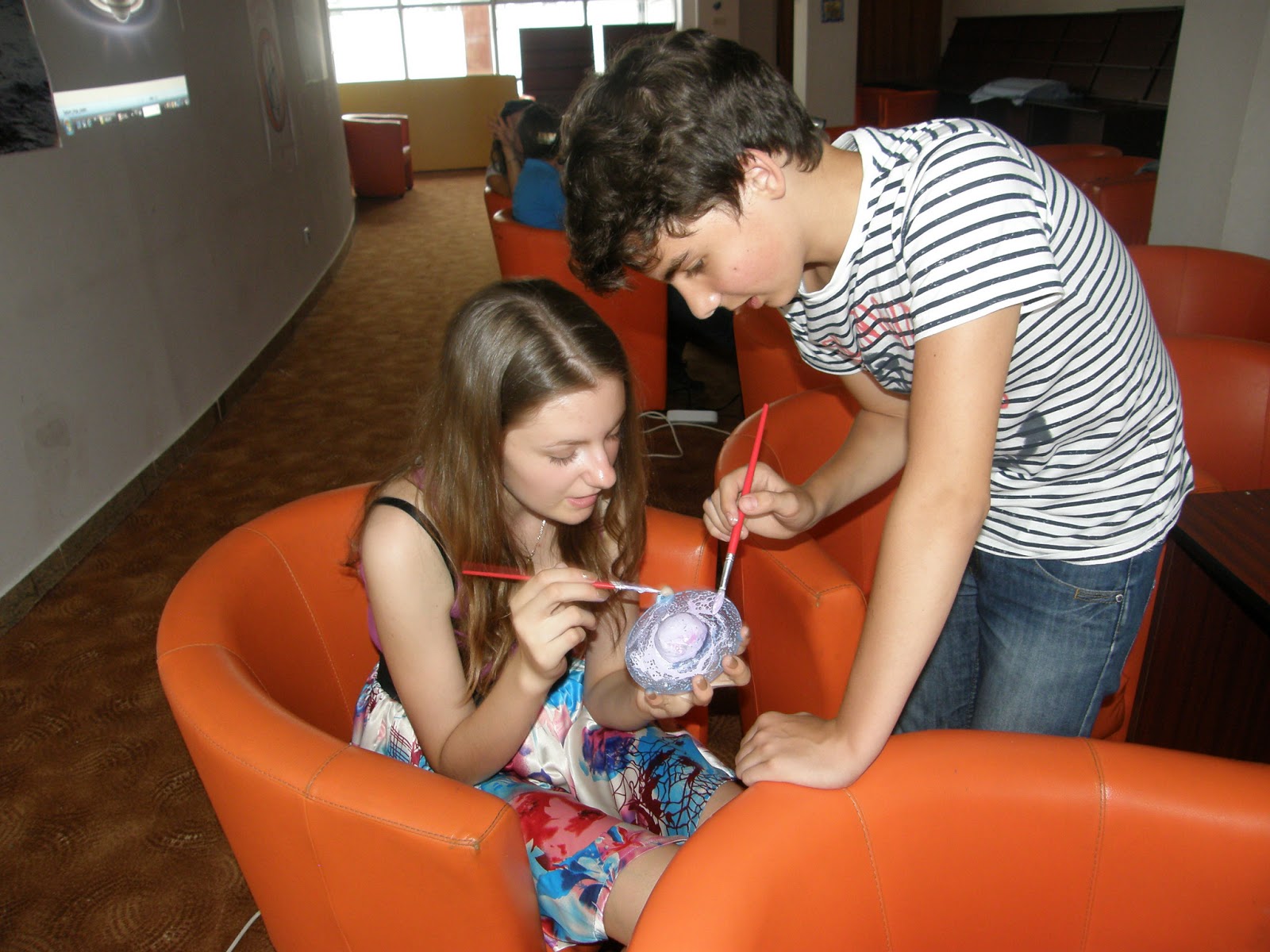
My students tried to made glorious rings around the beautiful Saturn.
May 9, 2013
Saturn is the second-largest planet and the easiest to recognize because of the bright rings around its equator.
They consist of chunks of ice and rock, ranging from specks of dust to large icebergs.
My students tried to made glorious rings around the beautiful Saturn.
The Sun
The Children's Educational Center,
Oradea, Romania.
March 14 and 28, 2013
The Sun is the center of our Solar System and our local star. It has no permanent features because it is gaseous- mainly incandescent hydrogen.
We study our Sun with http://irischallenge.arc.nasa.gov/ educational program.
Oradea, Romania.
March 14 and 28, 2013
The Sun is the center of our Solar System and our local star. It has no permanent features because it is gaseous- mainly incandescent hydrogen.
We study our Sun with http://irischallenge.arc.nasa.gov/ educational program.
Asteroid Belt
The Children's Educational Center, Oradea, Romania
February 28, 2013
Billions of space rocks-asteroids - orbit the Sun within the inner Solar System. Most are in the Asteroids Belt, which lies between the orbits of Mars and Jupiter.
There are three main types of asteroids-those made of rock, those made of metal, and those that are a mixture of the two.
When a meteorite collides with Earth, it can form an impact crater on its surface.
Mars, the red planet
The Children's Educational Center in Oradea, Romania
February 14, 2013
Named after the roman god of war because of its dusty red appearance, Mars is known as The Red Planet. Along with Mercury, Venus, and Earth, it is one of the four terrestrial planets of the inner Solar System.
The martian moons-Phobos and Deimos are small sattelites with a lower density than Mars. They may be asteroid captured by the Martian gravity.
Olympus Mons is the largest volcano in the Solar System, and Valles Marineris a vast canyon system.
February 14, 2013
The martian moons-Phobos and Deimos are small sattelites with a lower density than Mars. They may be asteroid captured by the Martian gravity.
Olympus Mons is the largest volcano in the Solar System, and Valles Marineris a vast canyon system.
Abonați-vă la:
Postări (Atom)